General Solutions
Laser Scar Treatment: Acne Scars, Fractional CO2 and 1550nm Protocols
Laser and light improve scars. They do not erase them. Take the heading above as a pathway, not a promise. A scar is what wound healing leaves behind, and scar treatment with a fractional laser works by controlled re-injury: you wound tissue in a precise pattern so the body rebuilds collagen more evenly. Some scars respond well. Others barely move.
The scar types you will actually see in the chair
Shape decides the machine. Our engineering archive splits scars three ways.
- Hypertrophic scars. Red, raised, firm. They appear within roughly a month of injury, stay inside the original wound border, and often itch. Some flatten slowly.
- Keloids. Nodules that grow past the wound margin. Earlobes, chest, shoulders, upper back. They don't regress on their own, and they recur.
- Atrophic scars. Depressed, not raised. Collagen was destroyed during inflammation, so the surface caves in. Cystic acne and chickenpox are the classic causes, and laser suits this group best.
Atrophic acne scars subdivide further, and that vocabulary drives your settings. Ice-pick scars are narrow, deep and steep-walled, often better served by punch excision first. Boxcar scars are wider with sharp edges; fractional ablation softens the rim. Rolling scars are tethered by fibrous bands, so subcision comes before the laser earns its keep.
One caution before anything is switched on. The American Academy of Dermatology warns that skin cancer can look like a scar, so anything atypical or non-healing goes to a dermatologist for diagnosis.
How laser and light treat scars
Two mechanisms are in play. Anderson and Parrish set out the first in 1983 with selective photothermolysis: pick a wavelength your target absorbs strongly, and a pulse short enough that heat stays put. In a red hypertrophic scar the target is haemoglobin. Damage that supply and collagen deposition stalls.
The second is fractional photothermolysis, described by Manstein, Herron, Sink, Tanner and Anderson in 2004. Instead of treating the whole surface, you place a grid of microscopic thermal columns and spare the skin between them. That spared tissue reseeds the wounds fast. Healing shortens, pigment risk falls, the dermis remodels.
Wavelength sets depth.
- 10600nm CO2. Absorbed by tissue water, ablative. Each pulse vaporises a column and coagulates its walls. Deepest remodelling, longest recovery.
- 1550nm erbium glass. Water-absorbing but non-ablative. The epidermis stays largely intact while heat builds in the dermis. Our device manuals put the focal spot near 50 micrometres, penetration around 2mm, and call collagen gain gradual over several weeks.
- 2940nm Er:YAG. Sits on the water absorption peak. Shallow ablation, little residual heat, gentler on Fitzpatrick III to VI.
Want the full comparison? Read CO2 vs Er:YAG vs 1550nm fractional laser.
Fractional CO2 or 1550nm? Match the tool to the scar
Our archive is blunt. A 1550nm system causes fewer side effects than ultrapulse CO2; CO2 remodels collagen harder. You pay for depth with downtime.
| Scar situation | First choice | Why | Realistic downtime |
|---|---|---|---|
| Deeper atrophic acne scars, Fitzpatrick I to III | Fractional CO2 10600nm | Deepest remodelling | About a week of redness |
| Shallow rolling scars, general roughness | 1550nm non-ablative | Remodelling without an open wound | A day or two of pink |
| Atrophic scars on Fitzpatrick IV to VI | 1550nm first, CO2 after a test spot | PIH risk climbs with depth | Longer intervals, more sessions |
| Red raised hypertrophic scar | Vascular targeting near 585nm | The chromophore is haemoglobin, not water | Purpura for several days |
| Keloid | Refer for combined management | Laser is an adjunct; steroid and surgery lead | Recurrence is the rule |
Treatment protocol and what to expect
Timing matters more than settings. A fresh scar keeps remodelling for a year or more, and our archive advises delaying atrophic resurfacing until it settles. Treat early and you are chasing a moving target.
- Assess and document. Classify the scar, record phototype, photograph under fixed lighting. Ask about isotretinoin, keloid tendency and herpes.
- Test spot. Non-negotiable on phototypes IV and above. Wait, review, commit.
- Plan a series. Nobody fixes a scar in one pass. Expect several sessions weeks apart, spaced wider if pigment appears.
- Set density before energy. Spot count balances result against healing time. Our platforms offer 6x6, 12x12 and 24x24 spots per square centimetre, roughly 1.56%, 6.25% and 25% coverage on the 1550nm systems.
- Review at intervals. Collagen keeps rebuilding for months. Judge at three months, not three days.
Be honest about the ceiling. The AAD states plainly that laser treatment cannot get rid of a scar; you trade one scar for a less noticeable one, and results take months.
Recommended Pmise equipment
Ablative work runs on the UltraPulse CO2 fractional laser range. The CF series uses an RF-excited CO2 source instead of a sealed glass tube, which holds pulse energy steady through a long session. From our device manuals: 10600nm, 30W with 10W and 20W options, focal spot 80 to 2000 micrometres, pulse energy 10mJ to 200mJ in 2mJ steps, pulse duration 0.067ms to 6.7ms, and scan areas of 1x1, 2x2 and 3x3 square centimetres.
For non-ablative work the EF series 1550nm erbium glass platform is the safer start, especially on pigmented skin. Same 30W ceiling, focal spot from 50 micrometres, penetration about 2mm. Need both wavelengths in one room? Our dual mode fractional laser covers that. Clinics with heavy acne caseloads pair scar work with our acne treatment approach.
Warranty, training and after-sales, plus what you should still ask
Clinical fit is half the purchase. The rest is commercial. Where nothing is published, we have written the question to put to sales.
| Item | What Pmise states | Ask before you sign |
|---|---|---|
| Warranty | One year from receipt and acceptance, free whole-unit repair against invoice and warranty card, artificial damage excluded | What counts as artificial damage |
| Operator training | Technical instructors train your team free after purchase, with phone follow-up and downloadable documents | On site or remote, and how many operators |
| After-sales response | About 30 minutes to a technical question, 12 to 24 hours for a written solution, 24 to 72 hours for a full fix; door-to-door service at least twice a year | Named contact and time zone |
| Consumables and maintenance | Lifetime maintenance is promised, covering consumable changes and repair; scanner optics, arm mirrors and handpieces are wear parts | Parts list with prices and expected life at your caseload |
| Certification and quality system | Our factory holds FDA, CE, RoHS and SGS certification; ask for the current certificate that names your exact model and market. Those files date from roughly 2010 to 2014, so read them as history, not as the status of the unit you order. | Current certificates naming your exact model and destination market, with issue dates; and, if you sell into the US, which models hold FDA 510(k) clearance |
| Distributor terms | Territory, pricing and demo units are agreed case by case | Territory, exclusivity, volume and demo terms in the contract |
Next step: request the CF series and EF series specification sheets and a scar-protocol quotation. Tell us your patient mix and phototype spread, and we will return the density and energy ranges we would start from, plus a price for your market.
Aftercare, risks and precautions
Water is the chromophore for CO2, Er:YAG and 1550nm, so epidermal contact cooling serves little purpose. Cold air for comfort is fine. Recovery discipline is what matters.
- Sun protection, strictly. Freshly treated skin that catches sun can scar again. It's the commonest avoidable bad outcome.
- Expect erythema and oedema after ablative work. Both self-limit, and tissue fluid leakage in the first days is normal.
- Watch pigment in the first one to two months. If it appears, pause, treat it, lengthen intervals. Late depigmentation is rare.
- Infection gets antibiotics. Acne flares and milia are common and manageable. Non-ablative sessions occasionally raise a blister.
- Screen out the wrong patients. Recent isotretinoin, keloid tendency, active herpes simplex, immunosuppression and prior radiotherapy belong on the exclusion list.
This page is educational content for clinics, physicians and distributors evaluating equipment. It is not medical advice and does not replace a clinician assessment for an individual patient.
Frequently Asked Questions
How many sessions does laser scar treatment take?
Plan a series, not a visit. The AAD says a dermatologist may schedule several treatments for lasting improvement, and our protocols assume multiple passes weeks apart. Deep atrophic scarring takes more sessions than shallow texture, and 1550nm needs more visits than CO2 because each pass does less.
Can you treat scars safely on darker skin?
Yes, with adjustments. Fitzpatrick IV to VI carries a much higher risk of post-inflammatory hyperpigmentation, and ablative CO2 is where it concentrates. Start at 1550nm with conservative density, run a test spot, extend intervals. Our guide to Fitzpatrick skin types and laser settings covers the parameter logic.
How soon after an injury or acne can we treat the scar?
For atrophic scars, wait. Collagen remodels naturally for roughly twelve to eighteen months, so our archive recommends holding resurfacing for at least a year while the scar matures. Raised red scars differ: early vascular treatment can reduce redness and itch. Diagnosis first, then timing.
Will the scar be completely gone afterwards?
No, and promising that will cost you. Laser improves texture, colour, pliability and often the itch or tightness a scar brings. It does not erase one. Set that expectation at consultation, photograph properly, and review at three months rather than three days.
Ready to price a scar programme? Send your requirement and we will return a quotation, spec sheets and a suggested protocol. Our service and warranty page lists the support commitments in full.
Recommended Equipment
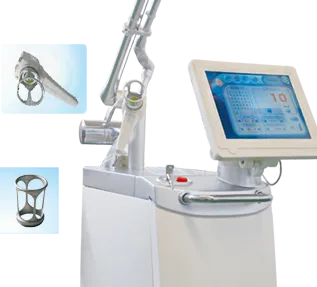
Pmise CF-03
Three output modes: CW, UltraPulse and Fractional.The COHERENT RF-excited metal laser system enables the output quality …
View details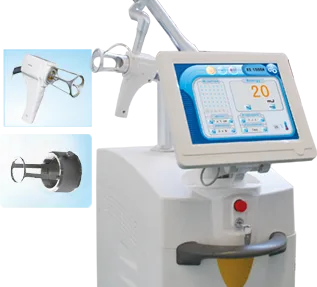
Pmise CF-01
Three output modes: CW, UltraPulse and Fractional.The COHERENT RF-excited metal laser system enables the output quality …
View details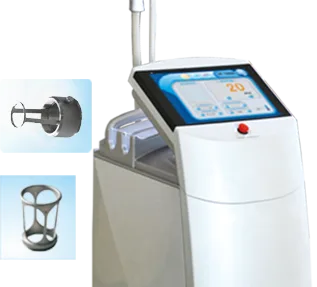
Pmise EF-02
The target tissue is water, no skin type limit (Fitzpatrick I-VI). The output spot diameter is 50-80 um, less thermal ab…
View details