
Vascular Treatment
Nevus Flammeus
Port wine stain treatment works by heating the oxyhaemoglobin inside a malformed capillary network with vascular laser or filtered light, so the vessels coagulate and fade. Nevus flammeus is that birthmark: a congenital capillary malformation, flat and pink at birth, and it never clears on its own.
This page is written for clinics, dermatologists and distributors comparing equipment. It's educational, not medical advice, and no substitute for clinical assessment.
What is nevus flammeus?
Nevus flammeus is a vascular malformation of the capillaries in the dermal papillae. The vessels form wrong in the embryo, leaving a permanent patch of wide, dense capillaries. The British Association of Dermatologists puts the incidence near one in 300 babies, boys and girls equally. Our engineering archive records the same 0.3% figure, a head and neck preference, and trigeminal distribution in over half of facial cases.
The mark grows with the child and never shrinks. A flat pink patch darkens toward red or purple over the decades, and the surface can thicken into cobblestone texture with raised nodules. Pyogenic granuloma sometimes develops on an older lesion.
One caution belongs right here, before any device is switched on. A nodule that is new, growing fast, bleeding, ulcerating or simply not behaving like the rest of the stain is not something you treat. It needs clinical assessment and histological confirmation first, by biopsy or excision from an appropriate specialist. Coagulate it and the diagnosis burns with it. Thickened, nodular components often belong to surgery or a multidisciplinary vascular anomalies team, not to a laser or a coagulating tip.
Diagnosis comes first, every time. An infantile haemangioma looks red too, yet it appears after birth, grows fast, then involutes. Simple telangiectasia is acquired and thread-like. Venous malformations sit deeper and read blue.
Red flags: a stain across the forehead, upper face or scalp can be associated with Sturge-Weber syndrome, meaning abnormal brain vessels and seizure risk. Glaucoma is another recognised association. The BAD and Great Ormond Street Hospital both advise neurology and eye assessment there. Refer first.
How laser and light treat a port wine stain
The whole approach rests on selective photothermolysis, described by Anderson and Parrish in Science in 1983. They showed 577 nm pulses damaging cutaneous microvessels selectively, sparing nearby tissue, so long as the wavelength matches the target and the pulse confines the heat. Port wine stains became a classic target: the lesion is redder than the skin around it, and that redness is blood.
Oxyhaemoglobin is the chromophore you're aiming at. Our engineering archive lists absorption peaks at 418 nm, 542 nm and 577 nm. The 418 nm peak is strong, yet it scatters in the epidermis, so practical systems sit in the yellow and green bands or push into the near infrared. Pulsed dye near 595 nm remains the reference standard, named first choice by the BAD and Great Ormond Street.
Filtered light platforms take a different route. A vascular filter passing 585 to 1200 nm, the VR configuration in our manuals, hits dilated capillaries at several depths in one pass. Bigger spots reach deeper at the same fluence, which is why the large handles matter. Long pulse 1064 nm sits at the other end: further reach, better epidermal protection in darker skin. A quirk helps there. Heated haemoglobin oxidises to methaemoglobin, which our archive records absorbing 1064 nm about 13 times more strongly than deoxyhaemoglobin.
Epidermal cooling isn't optional. Sapphire contact, cryogen spray and forced air do one job: keep the surface cold while the vessel underneath cooks. More physics in our explainer on selective photothermolysis.
Treatment protocol and what to expect
Treat early where you can. Our clinical archive is blunt: lesions that have turned proliferative and nodular are not sensitive to laser or IPL. Thin, flat, bright pink lesions have shallow vessels of small calibre, and those are the easy ones. Decades later the same birthmark may carry thick-walled, deep vessels under a hypertrophic surface. Great Ormond Street also notes a test patch before a full course, and that general anaesthesia is usually avoided before two years.
Set expectations before the first pulse, not after the fifth session. A course means many appointments over months or years, spaced far enough apart for skin to heal. Complete disappearance is uncommon. The BAD puts it plainly: the aim is a paler stain, not an erased one. Never promise a session count.
| Factor | Tends to respond better | Tends to respond slowly |
|---|---|---|
| Lesion colour | Bright pink to red | Deep purple, dusky |
| Surface | Flat and smooth | Cobblestone, nodular, hypertrophic |
| Age at first session | Infancy and childhood | Adulthood, long-established lesions |
Site matters, and the direction surprises people. In Renfro and Geronemus, Archives of Dermatology 1993, centrofacial lesions lightened less than other head and neck sites after pulsed dye laser. The patch on a nose is usually the slow one.
Right after a vascular pulse, expect purpura or a dusky grey-blue change. That's a normal endpoint, not a complication. Bruising can persist a week or two, and blistering or crusting turns up occasionally. Scarring is uncommon with pulsed dye laser at appropriate settings on cooled skin, after a test patch. Read that narrowly. It describes one modality at sensible parameters and does not transfer to every vascular device or fluence. Approaches that heat a larger tissue volume leave a thinner margin between clearing a vessel and injuring the dermis. Pigment change scales with skin type.
Recommended Pmise equipment
No single machine covers every port wine stain. Think toolkit.
- Filtered light and E-light platforms. The VR vascular handle at 585 to 1200 nm, sapphire contact cooling and selectable spots (10 x 10 mm, 8 x 40 mm, 15 x 60 mm in our device manuals) suit broad, flat, superficial lesions. Long pulse widths and multi-pulse sequences control how gently the heat builds. Pmise PE-01, VE-01 and MF-08 carry that setup.
- Long pulse Nd:YAG at 1064 nm. Our device manuals give Pmise LN-01 and LN-03 an adjustable 1 to 10 mm spot and pulse widths up to 50 ms, with handpiece cooling. Reach for it on darker skin and thicker, deeper components where visible-light platforms stall. Now the trade-off, stated plainly: on port wine stains, long pulse 1064 nm has a narrower safety margin than pulsed dye laser, because energy is deposited through a larger volume of tissue. Bulk heating, ulceration and atrophic or hypertrophic scarring are practical risks with this wavelength, not textbook footnotes. Conservative fluences, robust epidermal cooling, a mandatory test patch and staged review between sessions are the price of entry, and the handpiece belongs with operators already experienced at 1064 nm.
- High frequency vessel devices. Our high frequency systems for vessel diseases (Pmise VF-05, VF-06, VF-07) use a 0.01 mm tip to coagulate haemoglobin and seal single vessels on contact. It suits residual telangiectasia after a laser course, not a broad flat patch. One hard limit: never point it at an undiagnosed lump. Any new, rapidly growing, ulcerating, bleeding or otherwise atypical nodule inside a port wine stain has to be assessed clinically and confirmed histologically, by biopsy or excision from an appropriate specialist, before any coagulative or ablative device touches it. Nodular and hypertrophic tissue may need surgical or multidisciplinary management instead.
Be straight with buyers: pulsed dye holds the reference-standard position, and our platforms get chosen for versatility across a clinic's caseload. Our article on port wine stain laser treatment works through that comparison.
Aftercare and precautions
- Cool the area, keep it clean and dry. Don't pick crusts.
- Strict sun protection between sessions. Fresh purpura plus UV starts post-inflammatory hyperpigmentation.
- Screen for photosensitising drugs, recent isotretinoin, infection, keloid history.
- Refer for neurology or eye assessment where the distribution suggests Sturge-Weber risk.
- Test patch every new patient, then re-test on any change of wavelength, handpiece or fluence.
- Darker Fitzpatrick types need conservative fluences, longer pulses, aggressive cooling.
- Photograph under standardised lighting every visit. Gradual clearance is hard to judge otherwise.
- Stop and refer if a nodule appears, bleeds or changes. Histology before energy, always.
Frequently Asked Questions
How many sessions does a port wine stain need?
Plan for a long course, not a handful of visits. Sessions sit weeks to months apart so skin recovers, and a large facial lesion often runs for years. Nobody predicts the count at consultation. It depends on depth, colour, site and how the vessels behave early.
Can a port wine stain be removed completely?
Rarely. The realistic target is significant lightening, which is how the British Association of Dermatologists frames it. Some lesions lighten dramatically, some plateau early, a few barely shift. Vessels can reappear, so maintenance is sometimes needed.
Is treatment safe for darker skin types?
It can be, with the right platform and conservative settings. Melanin absorbs across the visible spectrum and competes with oxyhaemoglobin, raising the risk of burns and pigment change. Longer wavelengths such as 1064 nm clear much of that epidermal melanin, but demand more care with fluence and cooling. Test patch, wait, review.
Does a port wine stain ever fade on its own?
No. That's the key difference from an infantile haemangioma, which grows and then involutes. A capillary malformation is a structural fault in the vessel network. It enlarges with the child and darkens with age, so waiting only loses the window when treatment works.
Next step on equipment: tell us the caseload you actually see and ask for the vascular specification sheets. Clinical decisions stay with the clinician; equipment is where we help. Request a device comparison and we'll reply with parameter ranges, not a brochure.
Recommended Equipment
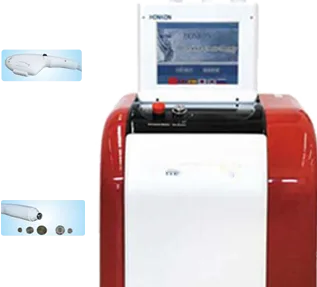
Pmise MF-04
One RF treatment handpiece(Cooling RW-VI with both Mono-polar and Bi-polar functions) and one E-light treatment handpiec…
View details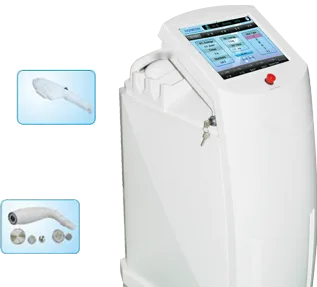
Pmise PE-01
Safe:Single pulse of HPT (Homogeneous Pulse Technology) delivers average energy and avoids the epidermis burns.Efficient…
View details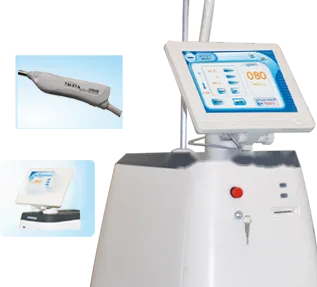
Pmise LN-01
Super compressor cooling system ensures long working time User-friendly operation interface.Direct energy output, less e…
View details