OEM beauty machines carry your brand on hardware a factory already builds. ODM goes further: the maker reworks the housing, the interface or the handpiece mix to your brief, then brands it for you. Your choice sets cost, schedule, and how much regulatory weight lands on you.
Below are the questions worth sending before anyone talks price. Send them in writing. A factory that answers clearly beats one that answers cheaply.
What is the difference between OEM and ODM beauty machines?
Short version: OEM is branding, ODM is engineering plus branding. Under OEM, or private label, the factory builds an existing model and swaps in your logo, your manual, your packaging. Under ODM the design itself changes first, which means drawings, samples and usually fresh testing. OEM is quicker and lighter on cash. ODM buys you something a rival cannot order from the same catalogue.
| Factor | OEM (private label) | ODM (custom design) |
|---|---|---|
| What changes | Logo, boot screen, manual, packaging | Housing, software, handpieces, feature mix, plus branding |
| Cost driver | Artwork and print runs | Engineering, tooling, prototypes, retesting |
| Lead time | Shorter | Longer, often much longer |
| Differentiation | Same platform your rivals can buy | Genuinely yours |
| Suits | Distributors, fast market entry | Brand builders, signature protocols |
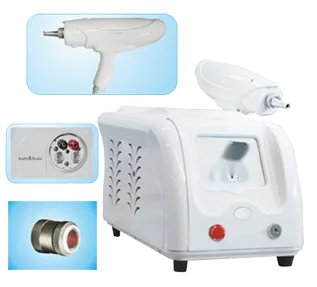
Most buyers walk it in that order: launch with OEM, learn what the market asks for, commission an ODM version once volume justifies the tooling bill. Our engineering archive from the early 2010s records a portable Q-switched platform documented as an OEM build for overseas customers, produced beside the standard model.
Go OEM when volumes are modest and the launch date is fixed. Go ODM when you need a distinct housing, a custom handpiece mix or a feature nobody else sells. Either way, be honest: branding a machine does not create a brand, it creates an obligation to support that machine for years.
What should you ask about MOQ, branding scope and customisation?
Settle MOQ, branding scope and customisation limits before price enters the conversation. A branded run normally carries a higher MOQ than a stock unit, because labels, manuals and sometimes moulds get produced for you alone. Factories also draw the free-versus-billed line in different places.
- What is your MOQ for OEM branding, and how does it shift for ODM work?
- Which items carry my brand: housing, boot screen, handpiece, manual, packaging, certificates?
- Which changes are free (silkscreen logo, colour, box art) and which are quoted as engineering?
- Can I buy a single branded sample before committing to the full run?
- Who owns the artwork, interface text and translated manual once you produce them?
- Will the model name and spec sheet match what I publish to my customers?
Expect two quotations, not one. An early Italian market file in our commercial archive priced one Q-switched platform in two tiers: an own-brand OEM price per single unit, and a personalised ODM price on a two-unit basis. Those prices mean nothing today. The structure still does. Customisation and quantity move together, so ask for both tiers.
Score your project against the variables that push MOQ up and the schedule out:
- Tooling. A new housing or trolley means a mould, and moulds get paid for in units.
- Software. Interface changes, custom presets and every extra menu language add build and checking work.
- Retesting. Electrical changes can trigger fresh safety and EMC testing plus a new declaration of conformity.
- Print runs. Manuals, labels and cartons in several languages carry minimums of their own.
- Market paperwork. Registration under your name runs on the regulator's clock, not the factory's.
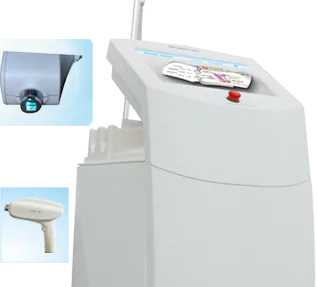
That last question trips people up. Copy drifts from the spec sheet, a customer notices, and you are the one explaining it. Two settled platforms from our catalogue: the Pmise QN-09, a portable Q-switched Nd:YAG listed at 1064nm and 532nm with a continuously adjustable 1 to 5mm spot and 7kg net weight, and the Pmise DL-04, an 808nm diode system with a 13mm by 15mm spot and sapphire contact cooling head. Both spec tables sit on the pages linked above. Put them beside your marketing draft before you publish.
Who owns the brand, the design and the software?
Settle ownership in writing before production starts, and register your trademark yourself. In an OEM deal it is the asset you are buying. According to WIPO, trademark rights are territorial: they apply only where you have registered them, so protection in one country does not travel with the goods.
- File your trademark in each selling market before you print a label.
- Sign an NDA before handing over designs, artwork or treatment protocols.
- Write ODM design and software ownership into the contract, clause by clause.
- Add regional exclusivity if you want your version withheld from nearby rivals.
- Confirm the factory is not applying someone else's protected mark to your unit. That liability follows you.
If ownership is not written into the purchase contract, treat it as unsettled. A friendly conversation on a factory tour is not an assignment of rights.
The regulatory catch most private label buyers miss
Putting your name on a medical device can legally make you its manufacturer. Under Article 16 of Regulation (EU) 2017/745, the European Medical Device Regulation, a distributor or importer that makes a device available under its own name or trademark takes on the manufacturer's obligations, unless an agreement keeps the actual manufacturer identified on the label and responsible for those duties. Read that twice if you sell into Europe.
So the branding question is really a legal one. Ask which arrangement your supplier offers, then get it papered. In the United States, most aesthetic lasers sit in Class II and reach the market through 510(k) premarket notification, per the US Food and Drug Administration, and your branding arrangement affects who is named on that submission. We compare both systems in our guide to FDA 510(k) and CE marking.
How do you check quality before you commit?
Ask for evidence tied to your specific model, not a folder of generic certificates. Aesthetic lasers are medical or medical-adjacent devices almost everywhere, so the quality system matters more than the quote.
- Quality system: is production run under ISO 13485, the medical device quality management standard? Ask for the current quality-system certificate and check that its scope covers design, development, production, sales and service for the lines you are buying. Certification runs on surveillance and renewal cycles, so ask us for the current certificate with its number and validity dates instead of trusting a date in a blog post.
- Market clearance: which certifications match my destination, and are they current rather than expired?
- Model-specific reports: safety and EMC reports naming the exact model you will ship, not a sister product.
- Traceability: which laser source and key components go in, and will they still be available in three years?
- After-sales: warranty terms, spare parts stock, repair turnaround, and who pays freight on a failed handpiece.
Check the dates on every certificate, ours included. A supplier who gets annoyed by that question has told you something useful. Our service and support page sets out the after-sales terms worth contracting for.
How long do OEM and ODM orders really take?
Branding adds modest time to a stock order. Design work adds a lot. The honest answer depends on the factory, the order size and how much you change, which is why you should demand a milestone schedule, not one ship date. Put dates against the rows below, and a name against every sign-off.
| Milestone | Deliverable | Who signs off |
|---|---|---|
| Brief and quotation | Spec sheet, branding scope, MOQ, separate OEM and ODM prices | You, in writing |
| Artwork approval | Logo files, colours, boot screen, label and manual layout, languages | You, on a proof |
| Design freeze (ODM only) | Drawings, software changes, tooling list, anything that triggers retesting | Both parties, dated |
| Sample or prototype | One branded unit, packed as production will be | You, after hands-on testing |
| Print run | Labels, manuals and cartons matching the approved proof | Factory QC |
| Production | Serial numbers and build records for your order | Factory QC |
| Pre-shipment inspection | Function test, safety check, photos, packing list | You or your inspector |
| Documents and dispatch | Invoice, certificates, test reports, manuals, shipping docs | You, before the balance |
A stock unit with no branding waits mainly on the production queue and shipping. OEM branding inserts artwork approval, the print run and a sample sign-off. ODM inserts design rounds, tooling or software work, prototype approval and any retesting. Every variable listed earlier lands somewhere on this table, which is why two factories quoting the same machine quote very different dates. Build in buffer. Our background sits on the about Pmise page, and our guide to vetting a laser manufacturer in China covers the wider due diligence.
What to send your shortlist this week
Turn this into a few emails and you'll sort the serious suppliers from the rest inside a fortnight. Ask us for any of the following through the Pmise contact page, and say which market you sell into:
- The OEM and ODM question checklist above, as a one-page document you can paste into any factory enquiry, ours included.
- Model-specific certification and test reports for the model you are weighing up, current versions with validity dates.
- A two-tier quotation covering OEM branding and ODM customisation on one platform, MOQ stated for each.
- A branded sample and a milestone schedule built on the table above, carrying your artwork.
Frequently Asked Questions
Is OEM cheaper than ODM for beauty machines?
Usually, yes. OEM puts your brand on a platform that already exists, so you skip engineering, tooling and prototype cycles. ODM adds all of those, plus any retesting the design changes trigger. The common pattern is to launch with OEM, prove demand, then invest in ODM once volume makes the tooling worth paying for.
What is the minimum order for a private label beauty machine?
It depends on the factory and on how far you customise. Branded runs typically carry a higher MOQ than a single stock unit, since dedicated labels, manuals and packaging must be produced, and ODM design work pushes it higher. Get each supplier's MOQ in writing, OEM and ODM separately, and ask whether they will build one branded sample first.
Does putting my brand on a machine make me the manufacturer?
In the EU it can. Article 16 of Regulation (EU) 2017/745 states that a distributor or importer supplying a device under its own name or trademark assumes the manufacturer's obligations, unless an agreement keeps the real manufacturer identified on the label and responsible for those duties. Ask which structure your supplier offers, and have a local lawyer review the wording first.
Pmise Technical Team. We build laser and light-based aesthetic equipment and support OEM and ODM buyers with branding, documentation, certification files and after-sales service.