Before you wire a deposit to any aesthetic laser China manufacturer, get four things in hand: current certificates naming your exact model, evidence the factory really builds machines, a written spec sheet for the laser source, and commercial terms you can hold someone to. Clear all four and the supplier earns a trial order. Stall on one and you've learned something.
China builds a large share of the world's diode, Nd:YAG, IPL and fractional CO2 platforms, and the quality spread inside that base is enormous. Some plants design and certify their own systems. Others buy finished units, print a logo, and forward your email elsewhere.
What certifications should a China laser supplier actually hold?
Three layers, and you want all three. Safety standards prove the machine was tested both as medical electrical equipment and as a laser product. A quality-system certificate proves the plant runs a controlled design-and-production process, not bench assembly to order. Market-access paperwork proves the device can legally be sold where you sell it. Ask for the PDFs, check who issued them, then match the model number on every document to the model on your quotation. A mismatch means you're holding paperwork for a different machine.
| Document or standard | What it covers | What a buyer should look for |
|---|---|---|
| IEC / EN 60601-1 | Basic safety and essential performance of medical electrical equipment | A test report naming your model. The electrical-safety floor for any patient-connected device |
| IEC / EN 60825-1 | Safety of laser products: classification, labelling, control requirements | The stated laser class. Treatment lasers land in Class 4, and interlocks, key control, beam stop and eyewear rating follow from it |
| IEC / EN 60601-2-22 | Particular requirements for surgical, cosmetic, therapeutic and diagnostic laser equipment | The clause set written for Class 3B and Class 4 lasers. Ask whether it was applied |
| CE (LVD + EMC) | EU electrical safety and electromagnetic compatibility | Both parts, not one. The EMC side normally cites 60601-1-2 |
| Medical CE / notified body | Conformity assessment under EU medical device rules | A notified body number, and a scope matching your device |
| ISO 13485 | Quality system for medical device design and manufacture | The scope line. It has to name your device category |
| FDA 510(k) | US premarket notification for a device and indication | Required for US sale unless exempt. Must name your model |
Read the report, not just the certificate. Three fields decide whether it's worth anything: the issuing laboratory and its accreditation, the exact model tested, and, on the laser report, the assigned class. IEC 60825-1 covers laser products emitting between 180nm and 1mm and sorts them by accessible emission; IEC 60601-2-22 sets the particular requirements for cosmetic, surgical, therapeutic and diagnostic laser equipment in Class 3B and Class 4. An aesthetic treatment laser sits at the top of that scale. An EMC report alone proves nothing about laser hazard. Archived declarations of conformity in our own documentation for the 808nm diode line cite EN 60601-1, EN 60825-1 and EN 60601-1-2 together. That's a full set.
Now ask about Chinese domestic status. It's the fastest way to separate a device maker from an assembler. Does the company hold an NMPA medical device registration or filing for the same model at home, and a production licence? China's National Medical Products Administration released Administrative Provisions for Medical Device Export Sales Certificates in December 2025, effective 1 May 2026, splitting export sales certificates into two types: one for devices registered or filed in China, one for unregistered devices from a manufacturer holding a valid production licence and meeting quality management requirements. Which of the two your supplier can obtain tells you where it stands.
Western regimes are not interchangeable either, and sellers blur that on purpose. In the United States, aesthetic laser systems are generally Class II devices needing a 510(k) premarket notification that shows substantial equivalence to a legally marketed device, unless the type is exempt, per FDA guidance. Europe runs on different logic: EU Regulation 2017/745, Annex XVI pulled aesthetic laser and intense-pulsed-light skin equipment inside the medical device rules even without a stated medical purpose, with a notified body in the assessment. Ask where your supplier's file stands today, in writing. Our breakdown of FDA 510(k) versus CE for the US market covers the split.
How do you tell a real factory from a trading company?
Ask to walk the floor on a normal working day, with little notice. A manufacturer shows you production, the burn-in and QC area, and final inspection. A trading company offers a showroom, reschedules twice, or points you to a "partner factory" you've never heard of. That one request separates most of the field.
- Cross-check the business license against the certificates and the bank details on the proforma invoice. All three should be one company.
- Request a live, unscripted walkthrough of production, the aging and testing area and final inspection, in one session on the same day.
- Ask who designs the control board and the operating interface. A firm that only assembles bought-in modules gets vague fast.
- For a container-sized order, buy a third-party audit from SGS, TUV, Bureau Veritas or Intertek, or send your own engineer.
- Ask the headcount on the line and the monthly build volume, then check that the floor you're shown matches.
Payment structure belongs in the same conversation. A deposit by T/T with the balance before shipment is ordinary. Full payment up front is not, and a request to wire funds to a personal account should end the discussion. Our company background page shows the manufacturing detail a serious supplier publishes rather than types into a chat window.
What should you insist on knowing about the laser source?
The source is where cost gets quietly cut, and it's the one component you can't judge from a photograph. Make the supplier put parameters on the quotation, not adjectives. "Powerful" and "medical grade" are worth nothing. Wavelength, energy density, pulse duration, repetition rate and spot size let you compare vendors on one axis.
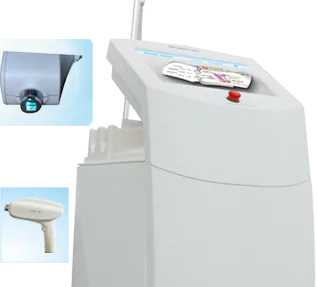
- Diode hair removal. Our manual for the Pmise DL-04 diode hair removal platform lists an 808nm wavelength, a 12mm by 12mm spot, 2 to 120 J/cm2 energy density, 5 to 300ms pulse duration, 1 to 10Hz repetition and 600W maximum laser output. That's the detail a quotation should carry.
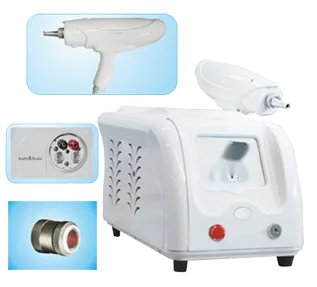
- Q-switched Nd:YAG. Documentation for our dual-wavelength Q-switched Nd:YAG systems, the Pmise QN-09 among them, specifies 1064nm and 532nm output, a 10 to 20 nanosecond pulse width and a continuously adjustable spot in the low millimetres. A seller who can't state the pulse width doesn't know the machine.
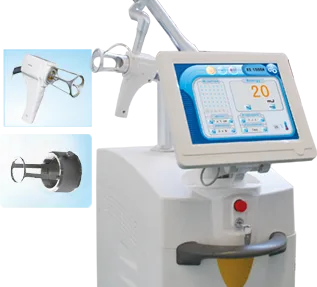
- Fractional CO2. Our records for the Pmise CF-01 ultrapulse CO2 fractional platform note an RF-excited CO2 source, 30W rated output, a spot adjustable from roughly 50 to 2000 micrometres, and three modes: ultrapulse, continuous and fractional. Is the tube RF-excited or glass? It changes beam control and service life.
Why do these numbers decide clinical outcomes? Selective photothermolysis, the principle Anderson and Parrish set out in Science in 1983: pick a wavelength the target absorbs, plus a pulse duration short enough relative to how fast that target sheds heat, and you damage the structure you meant to treat while sparing its neighbours. Wrong parameters don't just underperform. They put the operator's safety margin in the wrong place. If a rival quotation reads thin, ask our engineers for the matching parameter sheet.
Which commercial terms decide whether the order actually lands?
Specs and certificates get you a shortlist. Terms get you a machine on a date you can plan around. Settle these on the proforma invoice, and put the same questions to every supplier so the answers stay comparable.
- Production lead time. Ask for a ship date counted from deposit clearance and written on the PI, not "about a month". Then give it teeth: a late-delivery discount or penalty clause agreed before you pay, plus photos of the crated unit at handover.
- MOQ. Ask outright whether a single unit is accepted for a first order, and what quantity unlocks the distributor pricing you're quoted. A maker that demands a container before it ships anything wants volume more than a relationship.
- Sample cost and sample lead time. Get the sample price, the build time for one unit, and one sentence confirming whether that price is credited against your first bulk order. That sentence is worth negotiating for.
- Incoterms and freight. These systems travel as crated capital assets, often with a chiller and a trolley. Fix EXW, FOB, CIF or DAP up front, and name who books freight, who insures the crate, and who covers a forklift puncture in transit. Get crate dimensions and gross weight early; they drive the shipping quote and your customs entry.
- Destination-market registration. Nothing sells until your own regulator agrees. Ask which technical file and test reports the factory hands over, in whose name the registration sits, and how fast the factory answers a regulator's follow-up question.
Our guide to importing laser beauty machines walks through that paperwork chain in order.
What after-sales terms belong in the contract?
Write them down before you sign. Handpieces wear. Cooling systems clog. Sources degrade. Every hour of downtime is lost revenue for the clinic that bought the machine, and that clinic calls you, not the factory.
- Warranty length for the machine, stated separately from the source and the handpiece. The gap between them is where disputes start.
- Spare-parts lead time for the wear items, and whether a starter spares kit ships with the order.
- Remote support: which channel, which hours, which language.
- Operator manuals and training material your end users can actually read, not a machine-translated PDF.
- Who can reach service-level settings, and whether firmware faults need a return.
Our article on warranty terms and spare parts sets out what reasonable coverage looks like. Check any offer against it before you swap a shorter term for a discount. This matters more than the sticker price.
Which red flags should stop a deal?
Most bad orders broadcast themselves early. Any one of these deserves a hard pause. Two together mean you walk.
- A quote far under every other bidder for identical claimed specs. The gap hides somewhere: source, cooling or power supply.
- Certificates with mismatched model numbers, no issuing body, or cropped validity dates.
- No laser classification report, or a supplier who can't say which class the machine is.
- Repeated delays on a live walkthrough after you've asked twice.
- An invoice entity, a certificate holder and a bank account that don't all match.
- Refusal to put a ship date, an Incoterm or a warranty split in writing.
- Guaranteed permanent results, or cure language, in writing. No reputable maker signs that.
The cheapest machine is rarely the cheapest to own. A short-lived source and three weeks of downtime cost far more than the deposit you saved.
A vetting checklist you can copy
Run every candidate through the same gate, score each line pass or fail, and release no deposit until the must-have rows pass. Boring and repeatable is rather the point.
- Business license verified, matched to certificates and bank details.
- IEC/EN 60601-1 report on file, naming your model.
- IEC/EN 60825-1 report on file, laser class stated, 60601-2-22 applied.
- CE certificates for LVD and EMC, current, naming your model.
- ISO 13485 certificate with a scope line covering your device category.
- NMPA registration or filing status and production licence confirmed for the same model.
- Notified body confirmed for EU sales; FDA 510(k) status confirmed for US sales.
- Factory walkthrough completed, covering production and QC.
- Full parameter sheet for your model, printed on the quotation.
- Ship date written on the PI, with a late-delivery clause.
- MOQ agreed, sample price and build time quoted, sample credit in writing.
- Incoterm fixed, freight and insurance responsibility named, crate weight and dimensions supplied.
- Destination-market registration route mapped, technical file owner named.
- Warranty terms in writing, split between machine, source and handpieces.
- Spare-parts lead time and support channel documented.
- Two contactable references, ideally in your region.
- Sample unit ordered and tested before any bulk commitment.
Care to run that checklist against us first? Send your model requirement, target market and expected first-order volume through the Pmise enquiry form and you'll get four things back: the parameter sheet for the model, the applicable certificates with their scope lines readable, written warranty and spare-parts terms, and an indicative lead time with the Incoterm named. Engineers answer, not a script. Browse the Pmise product range first if you'd rather quote a model code.
Frequently Asked Questions
Which laser safety standard should appear in the file?
IEC or EN 60825-1, which classifies laser products by accessible emission and sets labelling and control requirements. Aesthetic treatment lasers are Class 4, the highest hazard class, and the report should say so plainly. IEC 60601-2-22 adds the particular requirements for cosmetic, surgical, therapeutic and diagnostic laser equipment in Class 3B and Class 4. Without both, plus 60601-1, the safety file is incomplete.
Is a CE mark enough to sell an aesthetic laser in my country?
Often not. CE marking addresses the European market, and under EU Regulation 2017/745 many aesthetic laser and IPL devices now sit inside the medical device rules through Annex XVI, which brings a notified body into the assessment. Selling into the United States is a separate exercise built around FDA clearance, and other markets run their own registration systems. Confirm your requirement before assuming one mark travels.
How do I check a Chinese factory without flying there?
Book a live video walkthrough on short notice covering production, the burn-in and QC area and final inspection, in one continuous session. Cross-check the business license against the certificates and the bank details, and ask whether the company holds an NMPA production licence for the model. For a larger order, commission a third-party audit before the balance payment.
Should I order a sample unit first?
Yes, almost always. One machine tells you what a spec sheet cannot: build quality, how the interface behaves through a long session, whether the documentation makes sense to your technicians, and how fast support replies when something breaks. Agree the sample price, the build time and whether that price is credited against the bulk order, then treat the unit as your final gate.
Pmise Technical Team. We design and manufacture laser and light-based aesthetic systems in China, and write from direct experience supplying and servicing this equipment for clinics and distributors worldwide.