
General Solutions
Epidermal Cooling in Laser Treatment: Methods, Safety and Protocol
Epidermal cooling in laser treatment means chilling the skin surface before, during and after each pulse, so the top layer survives energy aimed at something deeper. Follicles, dermal vessels and pigment clusters are the real targets. The epidermis just sits in the way.
Our older catalogues called this the "epidermal cooling total solution". Plain version: match the method to the target, then run it the same way every time. Here's how contact, cryogen and cold air compare, and where each trips operators up.
Why Epidermal Cooling Matters
Melanin lives in the epidermis, and melanin drinks light. That's the problem in one sentence. Energy the surface absorbs never reaches the follicle. It piles up as heat where you least want it, and past a point you get blisters, pigment change, a scar. Chill the surface first and three things happen:
- The epidermis gets a head start. Starting below body temperature, it takes its share of the pulse and stays under the injury threshold.
- You can use the fluence the target needs. Our engineering archive is blunt: cooling is what makes high energy density at a deep target possible. Without it the epidermis sets your ceiling, usually too low for a coarse follicle.
- It hurts less. Cold blunts nerve endings, and over a long session that decides whether the patient books again.
How Cooling Works Alongside the Laser Pulse
All of this rides on selective photothermolysis, the framework Anderson and Parrish published in Science in 1983. Pick a wavelength your chromophore absorbs, match pulse duration to the target's thermal relaxation time, and the target heats faster than it sheds heat. Cooling doesn't replace that logic. It buys room inside it. Timing splits three ways: pre-cooling, parallel cooling during the pulse, post-cooling afterwards. Contact and cold air cover all three. Cryogen spray handles the first two.
Wavelength changes the dose of cooling you need. Shorter visible wavelengths scatter hard in the epidermis and surface melanin takes a bigger share, so IPL and E-Light work leans on dependable surface protection. The 808 nm diode band and 1064 nm Nd:YAG meet less surface competition, which suits a chilled contact window. For pulse width, see our explainer on thermal relaxation time and pulse duration.
Now the part operators get wrong. Cooling isn't always right.
- Epidermal pigment. Treating freckles with a Q-switched laser? The pigment you want sits inside the layer you'd be cooling. Our archive advises against epidermal cooling there.
- Superficial vessels. Fine telangiectasia sits in the papillary dermis, close to the surface. Heavy real-time cooling shields the vessel too and flattens your result. Shorten cooling time, or cool gently before and after.
- Ablative resurfacing. Water is the chromophore for CO2 at 10600 nm and Er:YAG at 2940 nm, and tissue vaporizes outright. Cooling contributes little.
Cooling Methods Compared
No method wins on every axis. Each trades cooling power against cost, control and speed. Every number below names its source: a published review, or a named Pmise document.
| Method | Reported surface effect | Watch-outs |
|---|---|---|
| Contact, chilled sapphire window | Pmise DL-04 specification: constant 4 °C. Das, Sarda and De (2016) describe a contact tip near 4 °C before the shot, about 0 °C during it. | Our manuals note demand scales with spot size, rate, fluence and pulse width. The window must sit flat. |
| Cryogen spray (DCD), synced to the pulse | Das, Sarda and De (2016) report roughly double the temperature drop of contact cooling. Zenzie and colleagues (2000) compared spray and contact cooling directly. | Consumable cost, and sync timing is not optional. Continuous spraying frosts and erodes skin. Arcuate-shaped hyperpigmentation after cryogen cooling is reported in the literature Das and colleagues (2016) reviewed. |
| Forced cold air across the field | Das, Sarda and De (2016) cite convection cooling reaching about 15 °C in roughly 8 seconds. Raulin, Greve and Hammes (2000) found cold air safe and cheap. | No consumables, no beam interference. Keep the nozzle close, shield ears, nose and eyes. Das and colleagues (2016) note higher reported PIH with continuous cold air, so use timed exposures. |
Cooling gel and ice packs are pre-cooling aids, not a substitute for cooling during the pulse. Pmise light-based platforms use sapphire contact cooling, not cryogen spray: no consumable to reorder, no spray timing to get wrong, shorter optical path.
Darker Skin, PIH and the Safety Case
For Fitzpatrick IV to VI, cooling stops being a comfort feature and becomes your safety margin. More epidermal melanin means the surface competes harder for every pulse and heats faster. Burns, hypopigmentation and PIH follow, and PIH can outlast the original complaint.
Cooling alone won't rescue a bad parameter set. Stack the protections: a longer wavelength, conservative fluence, longer pulse duration, reliable contact cooling, and a test spot you actually wait to read. Our guide to Fitzpatrick skin types and laser settings shows how those choices interact, and our article on post-inflammatory hyperpigmentation after laser covers what to do when pigment rebounds.
Das, Sarda and De (2016) describe pain reduction from cryogen cooling as most pronounced in darker skin types. Read that as a hint about how much surface heat darker skin generates, not a licence to spray longer.
Treatment Protocol and What to Expect
Cooling is a parameter, not a switch. Treat it like fluence and pulse width. Write it into the protocol:
- Power up the cooling circuit and let it reach setpoint. Our manuals tell the operator to confirm the sapphire crystal has gone cold first.
- Clean and dry the field. Shave hair removal areas.
- Pre-cool a test area, fire a test spot at your intended settings, read the response.
- Treat with even contact and steady pressure, handpiece vertical, window flat. Gaps make hot spots.
- Post-cool the field to settle erythema and swelling.
Session counts follow the indication, not the cooling method. Hair removal usually runs several sessions a few weeks apart to catch follicles in growth phase, and results vary with hair colour, coarseness and hormones. Downtime after well-cooled non-ablative work is generally short. If patients blister routinely, review your parameters, not your aftercare.
This page is educational material for clinics and distributors evaluating equipment. It isn't medical advice or a protocol for any patient. Diagnosis and treatment belong to a qualified, trained operator.
Recommended Pmise Equipment
For hair removal, the practical answer is a diode platform with cooling inside the handpiece. The Pmise diode laser for hair removal range runs the 808 nm band through a chilled sapphire window, so the follicle gets its energy density while the surface stays protected. Our DL-04 specification lists a micro-channel cooled source rated to 600 W, 10 Hz, a 13 × 15 mm spot and sapphire contact cooling at 4 °C.
When a device has no integrated cooling, or the field is large, a standalone cold-air unit fills the gap. The Pmise VF-01 cooling device blows filtered, dried cold air adjustable to −20 °C. Use it the way the table above warns, not the way the spec sheet tempts you:
- Timed exposures, never a parked nozzle. Continuous cold air on one field is associated with higher reported PIH (Das, Sarda and De, 2016). Move the nozzle, work in passes, let skin recover.
- Shield ears, nose and eyes. Our archive flags these as the parts to protect during cold air cooling.
- Shorter exposure and a test spot on Fitzpatrick IV to VI. Darker skin carries the higher PIH risk. Start conservative, read the test area, then commit.
- Know when contact cooling wins. If the handpiece carries a sapphire window, use it: shorter light path, protection throughout the pulse. Cold air belongs on devices without integrated cooling, on large fields, and on ablative work where a window gets in the way.
Aftercare and Precautions
Good cooling reduces risk. It never erases it:
- Never hold a cryogen spray on one spot. Timed, synchronized bursts only.
- Test spot any uncertain skin type, then wait. Reading a response takes minutes. Fixing a burn takes months.
- Refer out or biopsy any atypical pigmented lesion. A laser is not a diagnostic instrument.
- Counsel patients on sun avoidance, bland skincare and PIH risk.
- The US FDA treats aesthetic lasers as prescription devices, used by or under the supervision of trained practitioners.
Frequently Asked Questions
Does epidermal cooling weaken treatment results?
Not when the target is deep. A follicle sits far enough below the surface that cooling protects the epidermis without reaching it. Results suffer when the target is shallow, such as fine telangiectasia or epidermal pigment, because the cold reaches it too. Good operators dial cooling back there.
Contact cooling or cryogen spray, which should I buy?
Both work. Das, Sarda and De (2016) describe cryogen spray achieving roughly double the temperature drop of contact cooling, which suits short pulses at high fluence, though it burns consumables and demands precise timing. Contact sapphire cooling is steady, consumable-free and shortens the optical path, which is why Pmise hair removal systems use it.
Why does cooling matter more on darker skin?
More epidermal melanin means the surface absorbs a larger share of every pulse and heats faster. Burns and PIH follow. Reliable contact cooling, a longer wavelength, conservative fluence and longer pulses give Fitzpatrick IV to VI patients a safer treatment. Test spot first, every time. Outcomes vary by individual and lesion.
When should cooling be reduced or skipped?
Whenever the target sits at or near the surface. Q-switched work on epidermal pigment usually runs without strong cooling, and our archive advises avoiding it. Ablative CO2 or Er:YAG resurfacing targets tissue water, so cooling adds little. For superficial vessels, cool gently before and after, then adjust on what the first pass shows.
Recommended Equipment
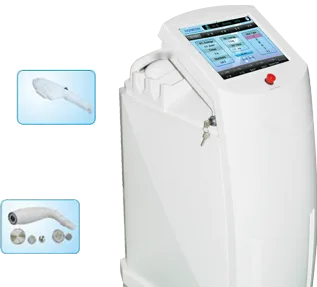
Pmise PE-01
Safe:Single pulse of HPT (Homogeneous Pulse Technology) delivers average energy and avoids the epidermis burns.Efficient…
View details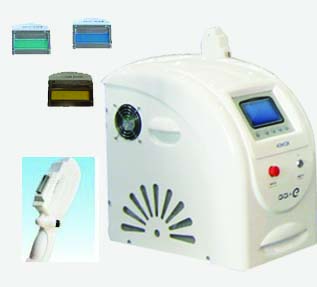
Pmise MF-08
QQ+e with V4.0 blue keyboard LCD; Small desktop design, easy to carry and transport, Handpiece with both a filter tube a…
View details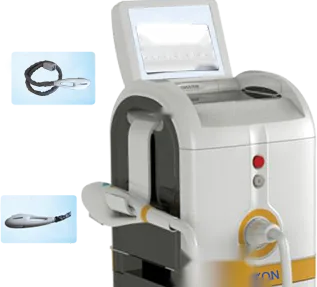
Pmise VE-01
HPT technology, uniform and even.Radio Frequency is a highly controllable energy heat source, works synergistically with…
View details