Seven aesthetic clinic machines cover nearly every treatment a new clinic gets asked for in 2026: a diode hair-removal laser, an IPL or E-light platform, a Q-switched Nd:YAG, a radiofrequency tightening system, an oxygen or hydra facial unit, a fractional CO2 laser, and a body-contouring device. Roughly that order, too.
Nobody needs all seven in month one, and most clinic startup budgets shouldn't try. This device list is ranked by how many hours a week each machine can realistically be earning, and it prices in the running costs.
Which aesthetic clinic machines should you buy first?
Lead with hair removal and a photofacial platform. They book out fastest, staff learn them safely, and clients come back on a schedule. The rest widen your menu once people are walking in weekly.
| Machine | Core treatment | Demand | Capital tier | Buy in |
|---|---|---|---|---|
| Diode laser (808nm) | Hair removal | Very high | High | Phase 1 |
| IPL / E-light | Photofacial, redness | High | Middle | Phase 1 |
| Q-switched Nd:YAG | Pigment, tattoos | High | High | Phase 2 |
| Radiofrequency | Tightening | High | Entry | Phase 2 |
| Oxygen / hydra facial | Facials, acne | High | Entry | Phase 2 |
| Fractional CO2 | Resurfacing, scars | Medium | High | Phase 3 |
| Body contouring | Fat reduction | Medium | Entry to middle | Phase 3 |
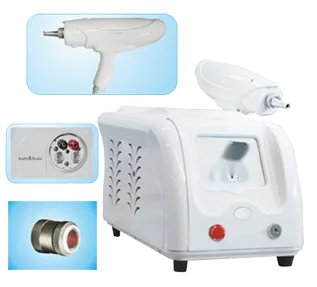
What makes this a 2026 list and not a 2019 one?
The physics hasn't moved. The paperwork has. Aesthetic devices with no intended medical purpose now sit inside the European medical device framework under Annex XVI of Regulation (EU) 2017/745, and Commission Implementing Regulation (EU) 2022/2346 has set their common specifications since 22 June 2023. Annex V covers equipment intended to reduce, remove or destroy adipose tissue; Annex VI covers high intensity electromagnetic radiation equipment for skin resurfacing, tattoo or hair removal. So in Europe a fat-freezing unit is a regulated device, and the conformity route belongs in the purchase conversation.
The ranking itself is no trend forecast. It follows versatility and utilisation, and that order barely shifts year to year. Compliance is the part that dates fast, and requirements differ between the EU, the US, the Gulf and Southeast Asia. Start with medical CE versus standard CE.
Phase one: the two machines that fill your diary
Diode laser for hair removal
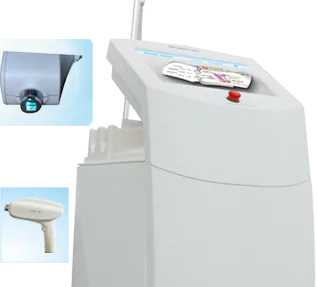
If you buy one machine, buy this one. Hair removal is the most-booked service in most young clinics, and a diode system built around 808nm targets melanin in the shaft and follicle. Our device manuals specify Fitzpatrick I to VI with sapphire contact cooling, protecting the epidermis while energy reaches the target. Anderson and Parrish set out the underlying principle, selective photothermolysis, in Science in 1983.
Be straight with patients. The U.S. FDA clears laser and light devices for permanent hair reduction, not permanent removal. Several sessions across the growth cycle are normal, and so is some regrowth years later. Say reduction from the first consultation and you'll argue about refunds far less.
IPL or E-light platform
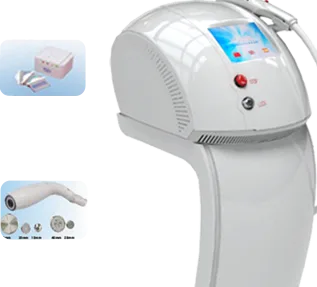
This one earns its slot by doing a little of everything. Broad-spectrum light and swappable filters mean one machine treats sun damage in the morning and diffuse redness after lunch; E-light designs add radiofrequency in the handpiece. Clients file a photofacial under maintenance, not under big decision.
Q-switched Nd:YAG for pigment and tattoo removal
Pigment work is the natural second act. Q-switched Nd:YAG lasers fire nanosecond pulses at 1064nm and 532nm; our technical archive describes the light being absorbed by pigment particles and shattering them through a photoacoustic effect, the fragments then cleared by the lymphatic system.
Two wavelengths, two jobs. 1064nm reaches deeper dermal pigment, 532nm the shallower brown and reddish marks. Our archive lays out multi-session protocols for melasma, Hori's nevus and tattoos. Sell courses, not single visits: ink colour, lesion depth and skin type all move the session count.
Radiofrequency and facial systems: the repeat-booking pair
Both are cheap to run, low on clinical risk, and they keep people coming back.
Radiofrequency tightening
"Can you tighten my skin without surgery?" You'll hear that weekly. RF energy passes through the epidermis and heats the dermis; our engineering documentation puts the working range at roughly 45 to 60 degrees Celsius, where collagen contracts and a slower regeneration response follows. It suits the client who can't take downtime before a wedding, and it sells in blocks of six.
Oxygen or hydra facial
This machine turns "a facial" into a clinical service with a proper price. Our product documentation describes a water and oxygen jet blending water, medical oxygen and a nutrient solution, sprayed as droplets in the 50 to 80 micron range to clean the follicle and sebaceous gland; listed uses include acne clearance and deep cleansing. No downtime, and often the first thing a nervous client books.
Fractional CO2 and body contouring: wait until you're ready
Fractional CO2 resurfacing
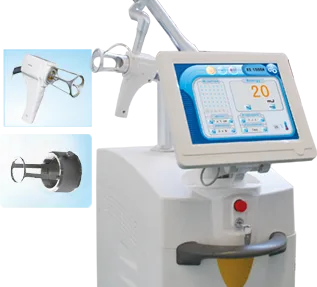
CO2 lasers emit at 10600nm, which water absorbs strongly. Scanner-based systems in our manuals use a galvanometer scanner and an F-theta lens to place ablative micro-spots around 0.25mm across, leaving untouched skin between them to drive healing. For scars and rough texture nothing else here comes close. It also punishes inexperience: real downtime, careful patient selection, aftercare that has to be followed. Hire the skill first, then buy the laser.
Body contouring: three technologies, one decision
Body contouring isn't a machine. It's three physics packages sold under one marketing word. Cryolipolysis cools fat, ultrasonic cavitation vibrates it, RF heats it and the skin above. Compare them before you shortlist a supplier.
| Technology | Mechanism | Best target | Session shape | Limits and contraindications |
|---|---|---|---|---|
| Cryolipolysis | A vacuum applicator draws in a fold of tissue and cools it; ASLMS describes the cooling as starting a natural removal process that thins the fat layer | Pinchable bulges (abdomen, flanks, love handles) on clients near normal weight | One cycle per area; our manual starts near 1 to 4 degrees Celsius for 30 minutes, handles allow up to 90. No downtime beyond brief redness. ASLMS: visible change from about three weeks, optimal by two months | Not weight loss. Cold disorders (cryoglobulinemia, cold urticaria, cold agglutinin disease) and hernia at the site are contraindications. Paradoxical adipose hyperplasia, treated fat enlarging, is uncommon but documented (StatPearls) |
| Ultrasonic cavitation | 40kHz ultrasound; our spec sheets state 40kHz has the greatest effect on hypodermal fat, each pressure cycle disrupting cell structure so contents emulsify. Usually paired with RF | Softer fat and cellulite over large areas: abdomen, thighs, arms. No downtime | Short sessions, area by area, sold as a course; our RF durations run 0.5 to 5 seconds | Not for obese clients. Our protocols exclude pregnancy, pacemakers or defibrillators, epilepsy, severe diabetes, hypertension, heart disease, kidney stones, broken or infected skin |
| RF body shaping | Monopolar RF with vacuum and roller massage; our slimming documentation puts RF heating at 5 to 15mm depth, infrared at about 5mm | Skin laxity and orange-peel texture, post-partum or post-liposuction. No downtime | Our protocol: 20 to 40 minutes per area, 3 to 7 day intervals, 10 to 12 treatments per course | Same exclusions as cavitation. Hands-on throughout, so labour cost per session is real |
Who walks in decides which you buy. Slim clients with one stubborn bulge belong to cryolipolysis: good price per session, little staff time once the applicator is on. A price-sensitive, high-volume market suits cavitation with RF, the cheapest entry and a natural course sell. If enquiries mention loose skin, buy RF and skip fat freezing. More in cavitation vs cryolipolysis vs RF.
How should you phase the equipment budget?
Buy in the three waves above and let the early machines pay for the later ones. We don't print prices: a quote moves with output power, handpiece count, cooling and the certification route your market needs, so ask suppliers to price your configuration. What you can plan without a figure is the capital order and the running costs.
By capital outlay the seven fall into three bands. Highest: fractional CO2, Q-switched Nd:YAG and the diode system, each with a laser source, optics and a serious cooling loop. Middle: IPL or E-light, and cryolipolysis with several applicators. Entry: RF, the oxygen facial unit, cavitation. The cheapest machine to buy is often not the cheapest to own.
- Diode hair removal: no lamp to replace; our brochure documentation rates the source at more than 20,000,000 shots. You buy filters, distilled water and chiller upkeep, and the source is the priciest spare, so warranty terms on it beat a discount.
- IPL / E-light: the xenon lamp is a real consumable, about 60,000 flashes in our maintenance documentation, output fading earlier, hair-removal results dropping off near 30,000. Cored water filter every two months.
- Nd:YAG: flash lamp roughly 1,000 hours in our manual before energy drops, plus optics cleaning and alignment.
- Fractional CO2: the tube decides your five-year cost. Our comparison puts glass tube life in the hundreds of hours against tens of thousands for an RF-excited tube. Ask which is quoted.
- Oxygen facial: nutrient solution, 0.9% sodium solution and tips every treatment. It scales with bookings.
- RF tightening: next to nothing beyond electrodes and handpieces.
- Body contouring: cryolipolysis burns petroleum jelly and an antifreeze membrane every cycle, per our manual. Cavitation and RF mostly consume gel.
Payback then rides on variables no datasheet lists.
- Price per session in your market. Local, not global.
- Room throughput. A facial turns over fast; a cryolipolysis cycle can hold a bed an hour or more.
- Consumable cost per session, from the list above.
- Operator cost. A cryolipolysis cycle runs largely unattended once set up, our documentation notes; a CO2 pass needs trained hands every minute.
- Course structure and spare-part lead time. A 10 to 12 session slimming course at 3 to 7 day intervals is a different cash-flow shape from a one-off, and a machine waiting weeks for a part earns nothing.
Four questions per quote. Are local clients asking for this treatment? Can your staff run it safely? Are consumables and service available where you are? Does it carry the certification your regulator requires? Browse our product pages, match machines to patient goals in the solutions hub, and test the figures with our guides to aesthetic laser ROI and running costs.
Frequently Asked Questions
How many machines do I really need to open an aesthetic clinic?
Two well-chosen devices are enough to open credibly: a diode hair-removal laser and an IPL or E-light platform. Between them you cover hair removal, redness, uneven tone and rejuvenation, which is where the volume sits. Pigment, tightening, facial and resurfacing machines follow later, funded by the first two.
Is laser hair removal permanent?
Not literally. The U.S. FDA clears laser and light devices for permanent hair reduction, a long-term stable decrease in the hairs that regrow, rather than total removal. Patients typically need several sessions across the hair-growth cycle, and some regrowth in later years is common. Call it reduction in your marketing.
Cryolipolysis, cavitation or RF for body contouring?
Match the technology to the complaint. Pinchable, well-defined bulges on a client of normal weight suit cryolipolysis, which runs mostly unattended. Larger areas of soft fat and cellulite suit 40kHz cavitation with an RF handpiece, the cheapest entry point. Loose skin points to RF. None of the three replaces weight loss.
Pmise Technical Team. Pmise (pameisi.com) manufactures laser and light-based aesthetic equipment and supports clinics and distributors worldwide with device selection, operator training and after-sales service.